In July 2024, a working horse barn on Baymare Road became a federally recognized work of architecture. Nobody in Bell Canyon had to build anything new to make that happen. The building had been standing since 1968, and residents who board horses there, or just idle behind a loose mare crossing the road on a Tuesday morning, had been driving past a nationally significant structure for decades without a plaque to tell them so.
The Bell Canyon Equestrian Center sits on ten acres just off the main loop through the community, and most people who use it know it by function rather than pedigree: box stalls, an arena, a place to drop off a kid for a lesson. What the National Register listing confirms is that the building doing all that work was designed by Cliff May, the architect most credited with inventing the California ranch-style house and spreading it nationally through spreads in Sunset and House Beautiful magazines. May never trained formally as an architect. He is, by the account of the historic preservation firm that prepared the nomination, the reason the low-slung, stucco-and-beam ranch house became the default vocabulary of postwar Southern California.
A Barn With the Same Bones as a Napa Winery
The detail that gives this listing its bite is not that a famous architect built a barn. It is which barn, and what else he built around the same time.
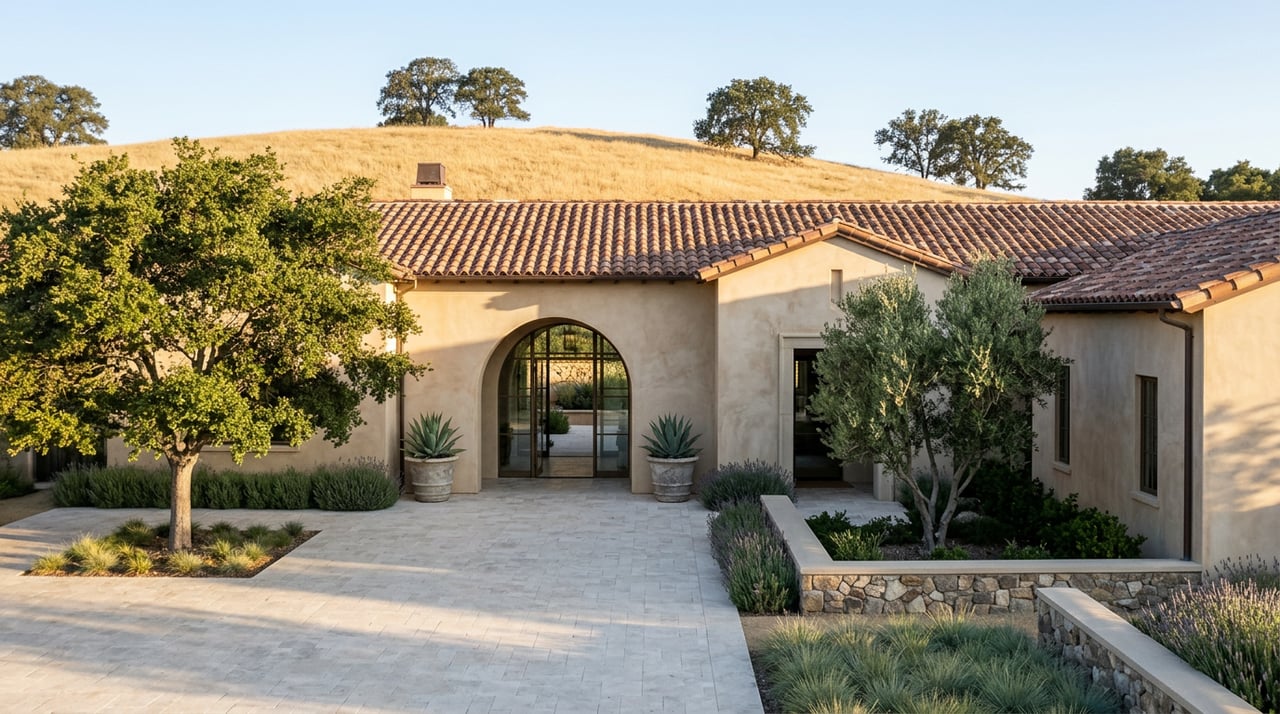
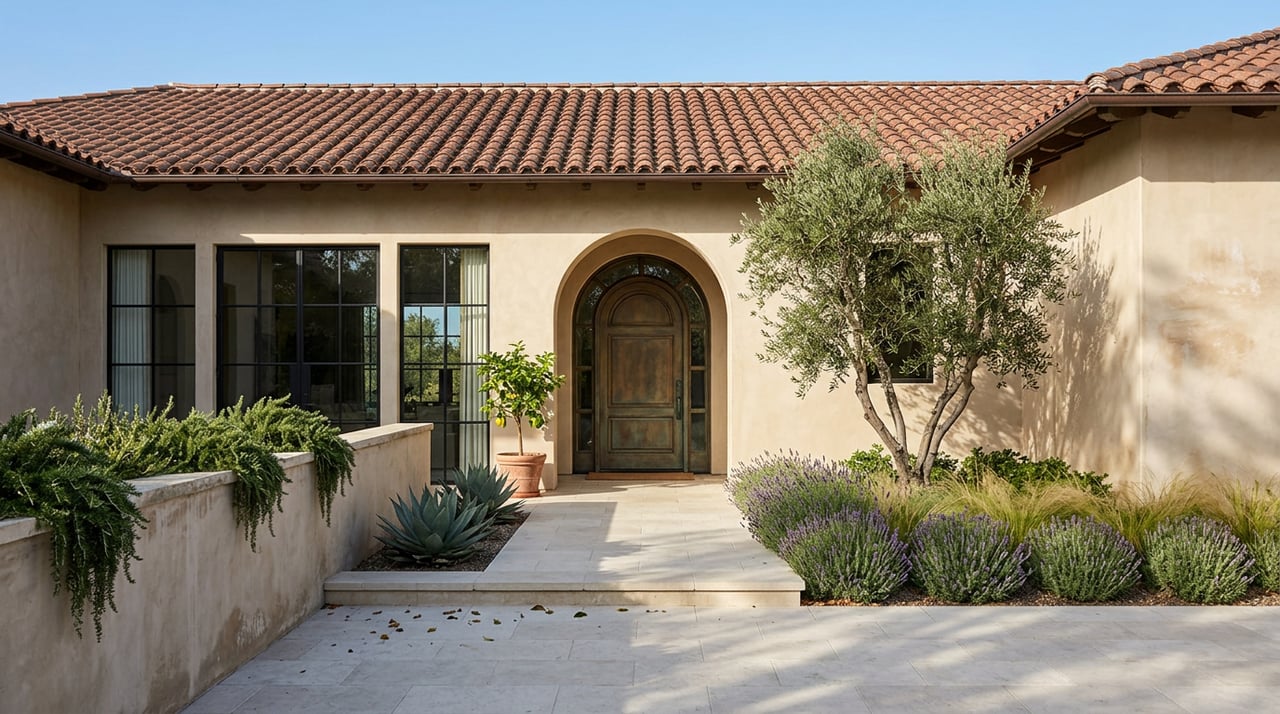
Two years before he drew up the Bell Canyon facility, May designed the entrance building for the Robert Mondavi Winery in Napa Valley, completed in 1966. The Mondavi building is one of the more photographed pieces of architecture in California wine country, an arched breezeway leading into a courtyard, capped by a tower. Walk through the arched entryway at the Bell Canyon Equestrian Center and you are looking at the same shape: an arch, a breezeway, a landscaped courtyard flanked by outbuildings. The preservation firm that handled the nomination noted that the Bell Canyon building appears to draw directly from that Mondavi design, with one distinction. Mondavi reads as Mission Revival. Bell Canyon reads as pure Ranch, May's own signature style, applied to a working stable instead of a tasting room.
That is the part worth sitting with. A design vocabulary built for wine tourists in Napa was adapted, almost unchanged in its bones, for a private equestrian community in the Simi Hills. One building draws visitors from around the world. The other one just handles school pickups and boarding fees.
How a Private Barn Gets a Federal Listing
The path from stable to National Register is not automatic, and Bell Canyon's version of it is a small case study in how a private community moves slowly and deliberately.
In September 2023, the Bell Canyon Homeowners Association approved moving forward with a historic designation for the equestrian center, funded by private donations rather than association dues. In March 2024, Ventura County's Cultural Heritage Board unanimously agreed the facility met the standard for nomination under the National Historic Preservation Act. By July 18, 2024, the listing was official. The nomination itself was prepared by Chattel, Inc., a Los Angeles historic preservation firm with a track record of successfully nominating other Cliff May buildings, including the former Sunset Magazine headquarters site in Menlo Park.
Ashley Forchelli, president of the Bell Canyon Equestrian Center, put the stakes plainly at the time:
"The BCEC is the stellar amenity of our 750-resident community."
The listing was granted under two separate criteria: significance in community planning and development, specifically for entertainment and recreation, and significance as the work of a master architect. Both had to be argued and both had to hold up to a county board's review before the file ever reached Washington.
What Actually Got Listed
The National Register documentation is specific about which parts of the property count as historically significant and which don't. The contributing features are:
- The Main Building, with its stucco walls, arched breezeway, and cylindrical tower
- The Landscaped Courtyard framed by the Stable Barns
- Four Stable Barns, still built on their original wood post-and-beam construction, with Dutch doors and shingled low-gabled roofs
- The Main Arena, an oval, double-ring layout original to the 1968 design
Not everything on the property made the cut. Some later additions to the grounds, wash racks and turnouts added over the years, were classified as non-contributing, meaning they don't carry the same historic weight even though they're part of daily operations. The building keeps working exactly as it always has: English hunter and equitation lessons, show jumping, dressage, boarding for residents and outside horse owners alike. A federal listing protects the fabric of the place. It doesn't freeze how the place gets used.
One Structure, Three Decades of a Neighborhood
The equestrian center is also, quietly, the oldest continuous thread running through Bell Canyon's history, and the community's own numbers make that easier to see than most neighborhoods can manage.
The property was built in 1968 as the anchor of a subdivision originally marketed as Woodland Hills Country Estates, before the developer renamed it Bell Canyon. A 1978 newsletter from the community's association reported 80 homes under construction, 130 occupied, and 40 more for sale. By 1996, that had grown to 553 homes. The 2020 census recorded 553 households in Bell Canyon. The build-out that started around the equestrian center in 1968 essentially finished by the mid-1990s, and the household count has not moved since. Whatever else has changed inside the gates over fifty years, the horse barn and the number of houses around it have stayed remarkably fixed.
That stability shows up elsewhere in daily life, too. The community's bridle trail network, roughly 35 miles according to the National Register nomination, runs through and past the equestrian center rather than around it. Residents also have access to a separate Waterfall Trail for hiking, and the Bell Canyon Community Center, a low, cream-brick building that hosts junior musical performances and houses the community gym, sits a short distance away. None of these are new additions built to compete for attention. They're the same handful of shared spaces the community has used since it was still called Woodland Hills Country Estates.
The next time a horse and rider hold up traffic on Baymare Road, they are crossing in front of a building the National Park Service now keeps on permanent federal record, designed by the same hand that shaped one of Napa Valley's most recognized wineries.
If you want to talk through what Bell Canyon's landmark status means for the community, or you're weighing a move inside the gates and want someone who knows the equestrian center's history as well as its listing sheet, reach out to Michael Bloom Homes to schedule a confidential consultation.