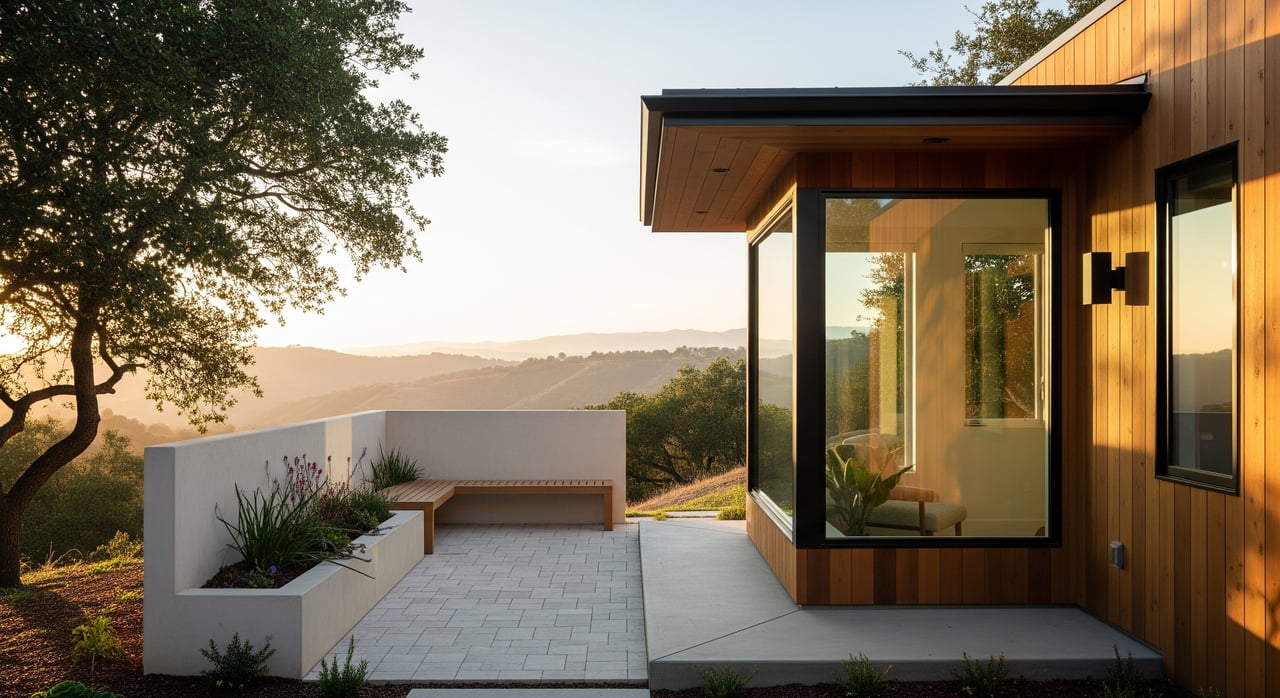
Thinking about adding an accessory dwelling unit to your Agoura Hills property, but not sure where to start? You are not alone. Many homeowners want flexible space for multigenerational living, caregiving, or a potential rental but feel unsure about rules, permits, and timelines. In this guide, you will learn the ADU and JADU basics, how California’s rules shape your options, the local steps in Agoura Hills, and a simple checklist to move forward confidently. Let’s dive in.
ADU types at a glance
Detached ADUs
A detached ADU is a separate structure on the same lot as your main home. Many people think of these as backyard cottages or guest houses. Design flexibility is high, but placement, fire-safety, and utility connections drive feasibility.
Attached ADUs
An attached ADU is built as an addition to the primary residence. It shares at least one wall with the main home. This can be a good option if your lot is tighter or slope and access make a separate building harder.
Conversion ADUs
A conversion ADU repurposes existing space, such as a garage, attic, basement, or internal rooms. These projects often move faster and cost less because you are using the existing footprint. Utility upgrades and parking rules still apply.
Junior ADUs (JADUs)
A JADU is a smaller unit created within the primary dwelling or attached garage. State guidance identifies JADUs at up to 500 square feet. JADUs typically have streamlined features and often require that the owner live in either the main home or the JADU.
State rules that shape your ADU
Ministerial approvals and timing
California law requires cities to process qualifying ADUs ministerially. That means if your complete application meets objective standards, staff can approve it without discretionary hearings. State law also sets maximum processing windows for complete ADU applications, commonly cited as 60 days.
Parking and impact fees
State ADU statutes limit how cities apply parking and fees. Under specific conditions, jurisdictions may not require replacement parking when converting or removing a garage. Many ADUs are eligible for parking waivers, especially if they are created from existing space, are within a half mile of public transit, or are JADUs. State rules also limit impact fees for smaller ADUs, often up to 750 square feet. Confirm how Agoura Hills applies these rules on your parcel.
Owner-occupancy and what to expect
State law restricts broad owner-occupancy mandates for standard ADUs. JADUs, however, commonly require that an owner occupy either the primary home or the JADU. Check current Agoura Hills requirements before you finalize a plan.
Permitting steps in Agoura Hills
Plan and pre-application
Start with a preliminary zoning check or a pre-application conversation with City of Agoura Hills Planning staff. Confirm your zoning district, setbacks, lot coverage limits, and whether your property is in a hillside or habitat-sensitive area. Clarify sewer versus septic, since that affects feasibility and timelines.
Gather basic site information early. A site plan, floor plans, and elevations are typical. On sloped or complex lots, a property survey, topographic data, and a preliminary geotechnical opinion can save time later.
Submit and plan check
Most ADU projects involve a combined planning and building submittal to Building & Safety. Expect plan checks for structural, mechanical, electrical, plumbing, and Title 24 energy compliance. If your application is complete and meets objective standards, the process is ministerial.
Specialty reviews you may need
In Agoura Hills, many properties sit within or near Wildland Urban Interface areas. A fire-agency review is common. You may be asked to provide defensible space, ignition-resistant materials, and confirm driveway width and turnarounds for emergency access. Additional reviews can include public works for driveways or stormwater, environmental or biological checks on habitat-sensitive sites, septic permits if not on sewer, and tree protection if protected oaks or native trees are present.
Inspections and final sign-off
Once your permits are issued, the City will inspect construction at key stages. Typical inspections include foundation, framing, rough mechanical, electrical, plumbing, and a final inspection. Stay in close contact with your contractor to keep inspections timely and complete.
Site and parking constraints to check
Zoning, size, and setbacks
Most single-family zones allow at least one ADU by right, subject to objective standards. The size and height of a detached ADU and the setbacks from property lines will guide where you can build. Smaller or highly constrained lots may favor an interior conversion or a JADU.
Fire and WUI considerations
Agoura Hills borders the Santa Monica Mountains and includes high fire hazard areas. Expect requirements for defensible space, ignition-resistant construction, and clear emergency access. These rules can influence materials, siting, and landscaping, so account for them early.
Sewer vs. septic realities
If your home connects to a municipal sewer, you may need to coordinate capacity or connection fees. On septic, the county health department will evaluate whether your system can support an additional dwelling. Many septic properties need upgrades or expansions, which add cost and time.
Driveways, utilities, and trees
Narrow or steep driveways can limit on-site parking and emergency access. Utility upgrades for water or sewer laterals and separate meters may be required. Protected oaks and other native trees often trigger additional review, protection zones, or mitigation.
HOA and CC&Rs
State law limits HOA bans on ADUs, but associations can impose reasonable restrictions. Check CC&Rs early and request written guidance. If conflicts arise, consider consulting an attorney.
Timelines and common delays
Typical schedule
- Pre-application and feasibility checks: about 1 to 4 weeks.
- Design and permit package preparation: about 2 to 12 weeks or more, depending on complexity and whether geotechnical or septic reports are needed.
- City plan check for ministerial ADUs: about 2 to 8 weeks, longer if multiple cycles are required.
- Specialty reviews, such as fire or septic: add about 2 to 8 weeks.
- Construction: about 4 to 12 weeks for simple conversions, about 3 to 9 months for detached new builds.
Many projects finish in about 3 to 12 months from start to finish. Complex sites, variances, or environmental reviews can extend timelines to 12 months or more.
Where delays happen
Common bottlenecks include incomplete initial submittals, missing soils or utility data, and late discovery of fire-access or landscaping requirements. Septic approvals can be slow. HOA questions, contractor scheduling, and added design cycles also push schedules.
Homeowner checklist
- Confirm zoning and parcel specifics with the Agoura Hills Planning Division, including setbacks, height, and lot coverage for ADUs on your property.
- Verify whether you are on sewer or septic. If on septic, contact the county health department. Ask your water and sewer providers about meter and lateral capacity.
- Request a pre-application meeting with the City and consult the local fire agency about WUI requirements, access, and defensible space expectations.
- Review your HOA’s CC&Rs and request written guidance on ADUs, if applicable.
- Gather site data: survey, topographic map, tree inventory, and a preliminary geotechnical opinion if on a slope.
- Choose your approach: conversion ADU, JADU, attached addition, or detached new-build, based on lot conditions and goals.
- Ask City staff for a written list of required submittal documents, fees, and current plan-check timelines.
- Obtain multiple contractor bids and confirm experience with ADUs in WUI environments and on hillside or septic sites.
Pro tips from the field
- Front-load constraints. Confirm fire-access, septic capacity, and tree protection before finalizing design.
- Keep plans complete. Missing Title 24, soils, or utility details often trigger extra plan-check cycles.
- Favor conversion where tight. Interior or garage conversions usually move faster and can avoid new-foundation costs.
- Plan for parking early. Map your driveway and off-street parking to show compliance or claim exemptions that apply under state rules.
- Document HOA communications. Get written responses on any design or exterior changes to avoid delays later.
Local resources to contact early
- City of Agoura Hills Planning Division and Building & Safety for local ADU ordinance, submittal requirements, and process.
- California Department of Housing and Community Development for statewide ADU guidance and summaries of current law.
- Los Angeles County Fire Department or the fire agency serving Agoura Hills for WUI standards and defensible space rules.
- Local water and sewer providers and the Los Angeles County Department of Public Health for sewer or septic guidance.
- California Building Standards Code, Title 24, for building and energy compliance.
Ready to explore your ADU?
An ADU can offer flexibility for family, visitors, or long-term planning, but success in Agoura Hills depends on careful design, early coordination, and complete submittals. If you want a local, discreet perspective on how your property’s slope, access, trees, or utilities might influence your options, we are ready to help you think it through.
Start a conversation with Michael Bloom to map your best path forward. Schedule a Confidential Consultation.
FAQs
What are the main ADU types in Agoura Hills?
- Detached backyard unit, attached addition, conversion of existing space, and smaller Junior ADUs created within the main home or attached garage.
How does California’s ministerial ADU approval work?
- If your complete application meets objective standards, staff can approve it without discretionary hearings, and state law sets maximum processing timelines.
Do I need parking for an ADU in Agoura Hills?
- Cities may require up to one space per ADU unless an exemption applies, such as conversions, proximity to transit, or JADUs, per state rules.
Are there fee reductions for small ADUs in California?
- State rules often limit impact fees for ADUs up to 750 square feet, but you should confirm local implementation with Agoura Hills staff.
What if my property is on septic in Agoura Hills?
- The county health department will evaluate capacity. Many septic systems require upgrades or expansion before adding a dwelling unit.
How long does an ADU project usually take?
- Many projects run about 3 to 12 months from concept to completion. Complex sites, variances, or environmental reviews can add time.
Do JADUs require an owner to live on-site?
- JADUs commonly require owner-occupancy in either the main home or the JADU. Verify current local requirements before you begin.